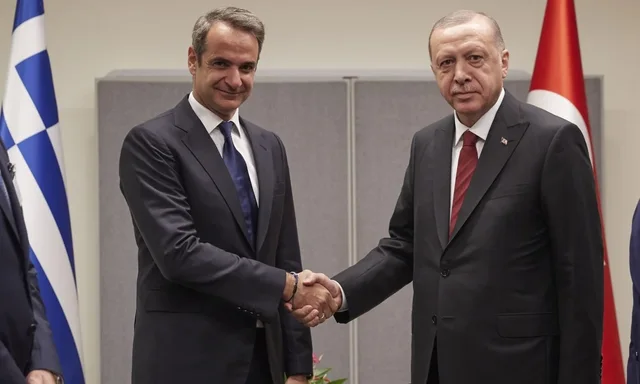
High-level talks aim to maintain calm despite deep political differences
A closely watched meeting between Recep Tayyip Erdoğan and Kyriakos Mitsotakis is taking place in Ankara, drawing strong regional and international interest. The summit coincides with the 6th High-Level Cooperation Council between Turkey and Greece. Both leaders aim to keep diplomatic channels open despite ongoing disagreements. Officials describe the talks as an effort to preserve stability in a sensitive geopolitical climate. Analysts say the meeting could shape future dialogue between the two neighbors.
Mitsotakis arrived with a delegation of ten ministers, signaling the importance Athens places on the discussions. He has repeatedly stated that he will raise issues such as the “casus belli,” disputed “gray zones,” and demilitarization concerns. These topics have resurfaced in recent days due to renewed rhetoric from Ankara. Greek officials emphasize that communication remains essential even when positions differ sharply. The visit is seen as a test of diplomatic balance.
One key issue notably absent from the agenda is maritime delimitation. Athens considers it the only legal dispute between the two countries, yet officials say conditions are not currently suitable for negotiations. Diplomatic sources suggest that focusing on achievable topics may help avoid renewed tensions. By limiting the agenda, both sides aim to maintain a constructive tone. Observers view this approach as pragmatic rather than confrontational.
Greek government insiders say Mitsotakis’ primary objective is to maintain open dialogue and avoid escalation. The message Athens hopes to send is that cooperation and communication can continue despite disagreements. Leaders believe regular meetings help prevent misunderstandings that could lead to crises. Maintaining a calm atmosphere in the Aegean region remains a central goal. Regional stability is especially important given broader global tensions.
The composition of the Greek delegation has also drawn attention. Defense Minister Nikos Dendias is not part of the visit, which many interpret as a deliberate political signal. Analysts suggest the absence highlights the economic and diplomatic focus of the talks rather than military issues. It may also help avoid symbolic gestures that could inflame sensitive security debates. This decision reflects the fragile balance between dialogue and rivalry.
The meeting comes at a significant moment for Ankara, following a small government reshuffle that included changes within the Interior Ministry. Such developments add another layer of political context to the discussions. Observers say leadership transitions can influence diplomatic tone and priorities. Both sides appear cautious but hopeful about maintaining progress. The timing of the summit has therefore attracted considerable attention.
Relations between Greece and Turkey have fluctuated over the past seven years, with periods of tension followed by renewed engagement. Previous meetings were sometimes postponed or canceled, illustrating the fragile trust between the two nations. Despite disagreements, leaders continue to emphasize dialogue as a way to manage disputes. Experts argue that sustained communication reduces the risk of sudden escalation. The Ankara meeting fits into this broader pattern.
Key disagreements remain centered on the Aegean Sea, Cyprus, airspace issues, and territorial sovereignty. These long-standing disputes have shaped the strategic relationship between the neighbors for decades. While breakthroughs are not expected, the continuation of talks itself is considered a positive sign. Diplomatic observers say even limited progress can help maintain regional calm. The focus remains on avoiding crises rather than achieving dramatic agreements.
International media outlets are closely following the developments. Analysts from global news organizations highlight the importance of dialogue between NATO allies with complex historical ties. Additional coverage and geopolitical analysis can be found at https://www.reuters.com/ and https://www.aljazeera.com/. These reports explore how regional diplomacy influences European security dynamics. The meeting’s outcomes may resonate beyond bilateral relations.
Joint statements from Erdoğan and Mitsotakis are expected later in the day, offering insight into the tone of the discussions. Observers will be watching carefully for signs of cooperation or renewed friction. Even without major announcements, maintaining dialogue is seen as a success by many diplomats. The relationship between Greece and Turkey remains a delicate balance of cooperation and competition. For now, the continuation of talks signals an effort to keep tensions in what Athens calls “calm waters.”https://newsttoday.com/
- https://newsttoday.com/catherine-ohara-death-cause-revealed-after-sudden-loss/
- https://newsttoday.com/france-shock-caseelderly-man-accused-in-global-abuse-crimes/